
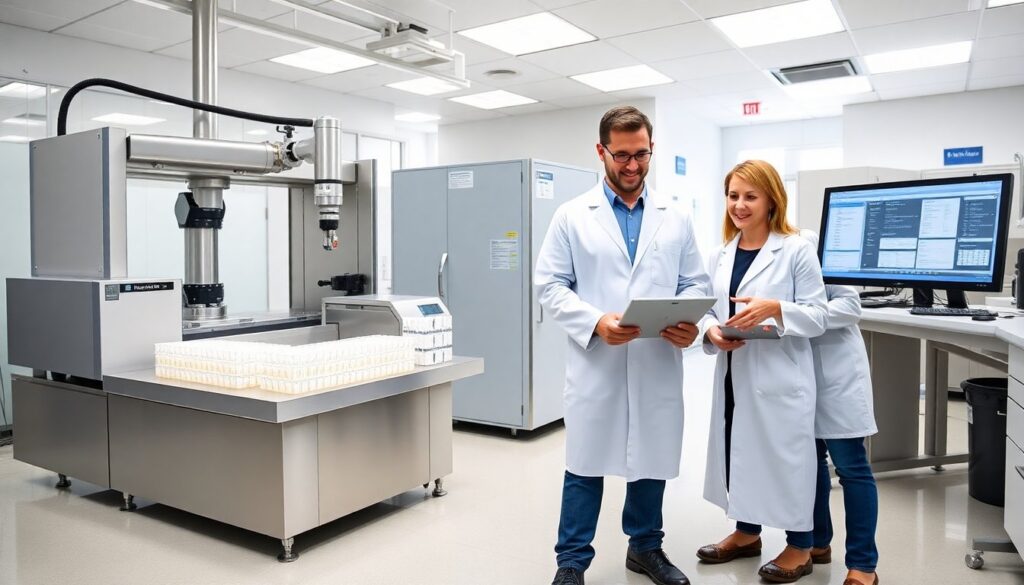
Hamilton Robotics builds automated lab workstations for research and clinical labs. The company designs liquid handlers, robotic arms, and workflow software. The systems increase throughput, reduce errors, and limit human exposure to hazards. Lab managers evaluate performance, cost, and compatibility. This article explains what Hamilton Robotics does, its main products and use cases, and how labs can evaluate and scale its systems.
Key Takeaways
- Hamilton Robotics specializes in automated lab workstations that enhance research and clinical laboratory efficiency by increasing throughput and reducing errors.
- Their core technologies include precise liquid handling, modular robotic workstations, and integrated workflow software that support scalability and customization.
- Hamilton Robotics systems improve lab safety, minimize contamination risks, and reduce ergonomic strain for staff through automated processes and enclosed biosafety features.
- The company offers various products like the STAR, VANTAGE, and Microlab series tailored for diverse applications such as genomics, diagnostics, and quality control.
- Labs should evaluate goals, conduct pilot studies, and plan for integration and training to successfully implement and scale Hamilton Robotics equipment.
- Tracking performance metrics like throughput, error rates, and staff time saved is essential for optimizing use and achieving predictable scaling of Hamilton Robotics systems.
What Hamilton Robotics Does: Core Technologies & Capabilities
Hamilton Robotics develops precise liquid handling instruments, robotic workstations, and control software. The firm makes modular platforms that robots drive for pipetting, plate handling, and sample tracking. The devices move liquids with microliter accuracy. They use calibrated pumps, disposable tips, and barcoded consumables to keep traceability. Hamilton Robotics integrates plate readers, PCR machines, and incubators into automated lines. The company also supplies scheduling and orchestration software. The software assigns tasks, monitors status, and logs errors.
Hamilton Robotics focuses on repeatability and safety. The systems reduce manual touch points and lower contamination risk. They lower ergonomic strain for lab staff. They use open deck layouts and enclosed units for biosafety. Hamilton Robotics offers flexible deck layouts and tool-change options. Labs can swap pipetting heads, grippers, and modules. The systems scale from single-deck workstations to multi-deck automation cells. They support 96- and 384-well formats and custom labware.
Hamilton Robotics provides connectivity for LIMS and cloud platforms. The connectivity sends sample metadata, run results, and audit trails. The company provides method development support and validation protocols. They supply calibration tools and maintenance plans. They train users to run protocols and to write scripts using their scripting language. The systems accept standard plates, tubes, and vials. They also accept specialty consumables for clinical assays.
Main Products And Typical Use Cases In Research And Diagnostics
Hamilton Robotics sells a range of core products. The STAR series delivers flexible liquid handling for assays and plate prep. The VANTAGE line offers integrated deck and conveyor automation for higher throughput. The Microlab systems provide compact workstations for PCR setup and sample prep. Hamilton Robotics also sells custom automation cells for clinical labs that run diagnostic panels.
Research labs use Hamilton Robotics for genomics, drug screening, and proteomics. The systems prepare libraries, dispense reagents, and normalize samples. They reduce variability across hundreds of samples. They speed up sequencing prep and high-throughput screening. Core users include academic labs, biotech firms, and CROs. These users pair Hamilton Robotics with sequencers and mass spectrometers to create automated pipelines.
Clinical labs use Hamilton Robotics for diagnostic testing and routine workflows. The systems run PCR setup, ELISA plate prep, and sample aliquoting. They support SARS-CoV-2 testing, multiplex PCR panels, and blood screening. Clinical users gain faster turnaround times and consistent assay performance. The systems help labs meet regulatory needs because they log runs and maintain audit trails. Hospitals and reference labs use Hamilton Robotics to reduce manual errors and increase daily sample capacity.
Industrial labs use Hamilton Robotics for quality control and compound management. The systems handle reagent distribution, serial dilutions, and plate replication. They integrate with inventory systems for sample tracking. They also support stability testing and environmental monitoring. Across sectors, Hamilton Robotics provides consumables, assays, and service contracts to keep systems running.
How To Evaluate, Implement, And Scale Hamilton Robotics In Your Lab
A lab should define goals before it buys Hamilton Robotics equipment. The team should list targets for throughput, turnaround time, and error reduction. The team should note sample types, plate formats, and integration needs. The lab should estimate workload peaks and downtime windows.
Next, the lab should run a pilot study. The lab should test core workflows on a demo unit or at the vendor site. The pilot should measure hands-on time, reproducibility, and consumable use. The team should capture failure modes and maintenance needs. The lab should compare pilot results to manual baselines. The lab should also verify traceability, data export, and compliance logs.
Implementation requires hardware placement, network setup, and protocol migration. The lab should map floor space and power needs. The team should connect the system to LIMS and storage. The vendor can install software and help transfer SOPs. Training for operators is critical. The lab should plan for cross-training to cover vacations and turnover.
Scaling starts with modular expansion. The lab can add pipetting heads, plate hotels, or conveyors. The lab should phase in new modules while keeping key assays online. The team should standardize consumables and labware to limit variability. The lab should set up preventive maintenance and spare parts inventory. Service contracts from Hamilton Robotics can reduce downtime.
Costs include capital, consumables, service, and staff training. The lab should calculate cost per sample and break-even time. The lab should include validation time and regulatory documentation in the budget. Hamilton Robotics often provides validation templates and method transfer support.
Finally, the lab should measure outcomes after rollout. The team should track throughput, error rates, and turnaround. They should track staff time saved and assay reproducibility. They should run regular reviews to adjust protocols and to add capacity as demand grows. Labs that monitor these metrics can scale Hamilton Robotics equipment with predictable results.